


Proyecto: Ferrocarril interurbano Qingdao-Rongcheng
Proyecto de ferrocarril interurbano Qingdao-Rongcheng - Shandong, China
Un ferrocarril de alta velocidad transformador que conecta Qingdao, Yantai y Weihai, donde las herramientas HiTens garantizaron la precisión del atornillado y la fiabilidad estructural en puentes y túneles complejos.
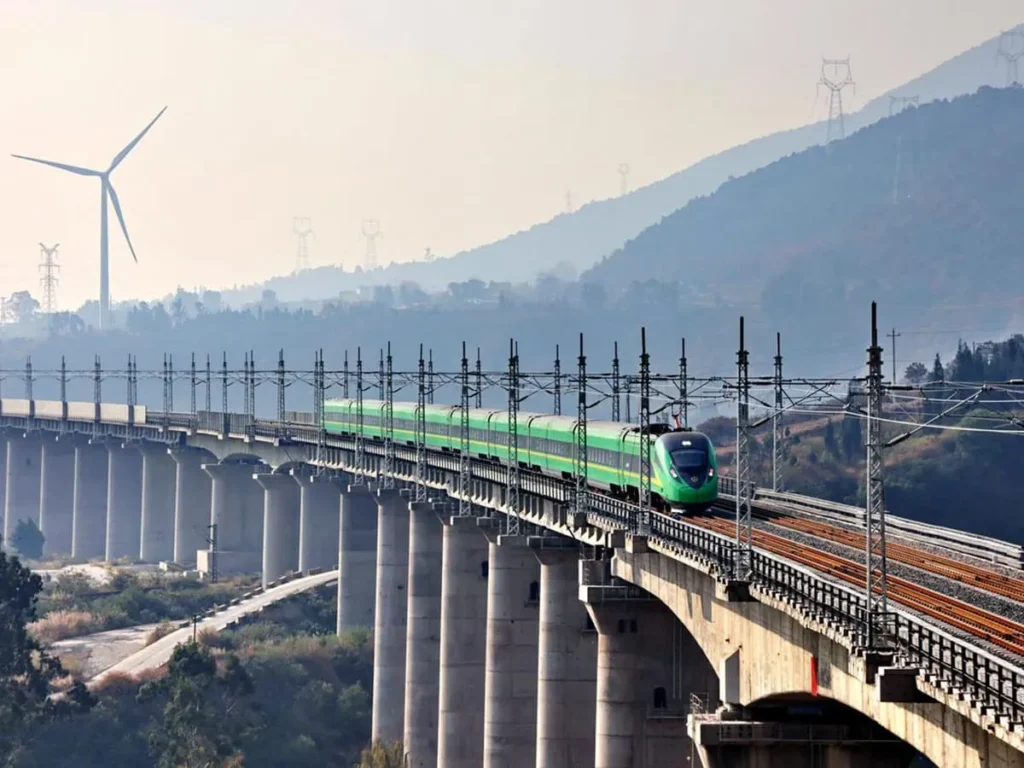
Resumen del proyecto
El ferrocarril interurbano Qingdao-Rongcheng (Qingdao-Rongcheng ICR) es un corredor ferroviario fundamental en la provincia de Shandong, que discurre de suroeste a noreste a lo largo de la península de Jiaodong y constituye la espina dorsal de la red ferroviaria interurbana de la región. Como parte de la red ferroviaria de alta velocidad china “Ocho Verticales y Ocho Horizontales”, la línea contribuye al Corredor Costero, facilitando tanto la movilidad regional como la conectividad nacional.
La construcción comenzó el 10 de octubre de 2010, con inauguraciones escalonadas: el segmento de Jimo a Rongcheng en diciembre de 2014, la línea directa Qingdao-Yantai y el enlace Yantai-Rongcheng en febrero de 2015, y la explotación de toda la línea a partir del 16 de noviembre de 2016. El ferrocarril se extiende a lo largo de 316 kilómetros con 15 estaciones, está diseñado para velocidades de 250 km/h y funciona a la misma velocidad.
Resumen del proyecto
El ferrocarril interurbano Qingdao-Rongcheng (Qingdao-Rongcheng ICR) es un corredor ferroviario fundamental en la provincia de Shandong, que discurre de suroeste a noreste a lo largo de la península de Jiaodong y constituye la espina dorsal de la red ferroviaria interurbana de la región. Como parte de la red ferroviaria de alta velocidad china “Ocho Verticales y Ocho Horizontales”, la línea contribuye al Corredor Costero, facilitando tanto la movilidad regional como la conectividad nacional.
La construcción comenzó el 10 de octubre de 2010, con inauguraciones escalonadas: el segmento de Jimo a Rongcheng en diciembre de 2014, la línea directa Qingdao-Yantai y el enlace Yantai-Rongcheng en febrero de 2015, y la explotación de toda la línea a partir del 16 de noviembre de 2016. El ferrocarril se extiende a lo largo de 316 kilómetros con 15 estaciones, está diseñado para velocidades de 250 km/h y funciona a la misma velocidad.
Retos de ingeniería
El ICR Qingdao-Rongcheng presentó numerosos retos técnicos y medioambientales, incluyendo:
Construcción de túneles complejos: La línea atraviesa zonas urbanas densamente edificadas, con 30 túneles que abarcan condiciones geológicas y gradientes variados.
Numerosos puentes: El ferrocarril comprende 185 puentes, Desde pequeños viaductos hasta grandes pasos fluviales, cada uno con sus propios requisitos de carga, viento y sismo.
El proyecto exigió una planificación meticulosa para integrar las normas de seguridad del tren de alta velocidad con la viabilidad de la construcción en todo el país. terrenos urbanos, costeros y fluviales.
Estructuras clave e innovaciones
1. Paso elevado Jiaozhou-Jimo (Puente Jiaozhou-Jimo)
Este puente es un punto de control crítico a lo largo de la línea, con una longitud de 5.184,68 metros y 149 vanos. Atraviesa
Ferrocarril Jiaozhou-Jinan existente
Autopista de Jiqing
Dos arterias urbanas
Entre los retos a los que se enfrentaban se encontraban las operaciones de trenes en directo, los sistemas de catenaria de alta tensión (27.500 V) bajo el puente y la compleja gestión del tráfico. Los ingenieros recurrieron a la elevación y rotación sincronizadas de dos segmentos principales del puente mediante sistemas de alineación controlados por ordenador, con inyección final de lechada en las juntas para lograr una continuidad y una transferencia de carga precisas.
2. Puente marítimo sobre la bahía de Shuangdao
El puente de la bahía de Shuangdao, con 6.726,79 metros de luz, es el puente de viga continua más largo de la línea férrea. El vano principal alcanza los 128 metros, lo que lo convierte en el mayor vano continuo de la línea. Se puso especial cuidado en evitar la contaminación de las zonas de acuicultura, lo que exigió una cuidadosa logística y vigilancia medioambiental durante la construcción.
3. Túnel Zhenshan
El túnel de Zhenshan, de 5.505 metros de longitud, sirve de entrada crucial a la ciudad de Yantai. Situado enteramente bajo zonas urbanas, la distancia vertical del túnel a la superficie varía entre 4 y 129 metros, lo que exige técnicas innovadoras de refuerzo del terreno:
Estabilización de la lechada superficial
Sistemas de soporte de tuberías en el interior del túnel
Estos planteamientos garantizaban la seguridad estructural al tiempo que reducían al mínimo la perturbación de las infraestructuras de la ciudad.
Aspectos destacados del diseño estructural
Alineación de vías: 316 km de pistas específicas de alta velocidad, totalmente electrificada, con Velocidad de diseño de 250 km/h.
Tecnología de puentes: Combina puentes continuos de acero y hormigón pretensado para una óptima distribución de la carga y durabilidad.
Diseño del túnel: Emplea revestimiento segmentario y soporte de tubería-techo para resistir el hundimiento urbano y las fuerzas sísmicas.
Control medioambiental de doble uso: Los puentes costeros incluyen mitigación de las mareas de tempestad y protección del ecosistema marino medidas.
El diseño hace hincapié en seguridad operativa a alta velocidad, resistencia a los terremotos, y eficacia del mantenimiento a largo plazo.
HiTens Contribución
Las herramientas HiTens formaron parte integral del proyecto. precisión de montaje y fiabilidad estructural, sobre todo en:
Construcción de puentes:
Garantizar pernos de alta resistencia se instalaron con los valores de par exactos para cerchas y dovelas de acero.
Mantener tensión constante a lo largo de grandes vanos, lo que es crítico tanto para la carga vertical como para la resistencia sísmica.
Estructuras de túneles y portales:
Las llaves dinamométricas HiTens se utilizaron en conectores de acero reforzado dentro de los revestimientos de los túneles y los soportes de los portales.
Proporcionó calibración y garantía de calidad para mantener alineación milimétrica a través de túneles curvos e inclinados.
Cierre de tramos complejos:
Durante el rotación y unión de los segmentos del puente Jiaozhou-Jimo, Las herramientas HiTens garantizan los pernos de unión cumplen especificaciones precisas, salvaguardando la continuidad estructural del puente.
Proporcionando soluciones de atornillado de alta precisión, HiTens permitió a los ingenieros cumplir rigurosas tolerancias de diseño, incluso en condiciones de construcción difíciles.
Impacto operativo
El ICR Qingdao-Rongcheng ha mejorado espectacularmente el transporte regional:
Reducción de los tiempos de viaje: El trayecto de Qingdao a Rongcheng dura ahora menos de 3 horas, lo que supone una mejora significativa respecto a las alternativas anteriores por ferrocarril o carretera.
Capacidad de pasajeros: Soporta cientos de miles de pasajeros diarios, conectando múltiples centros urbanos.
Integración del transporte de mercancías: Permite el tránsito fluido de mercancías entre los centros industriales de la península de Jiaodong.
Conectividad urbana: Mejora el acceso entre Qingdao, Yantai, Weihai y las ciudades vecinas, fomentando el desarrollo económico y el crecimiento turístico.
El ferrocarril ha permitido la formación de un “círculo económico de una hora” que une Qingdao, Yantai, Weihai y Rongcheng, al tiempo que impulsa el turismo y las industrias locales gracias a la mejora de la accesibilidad.
Beneficios económicos y sociales
Desarrollo regional: El ferrocarril transformó la península de Jiaodong, que pasó de ser una zona costera periférica a una puerta estratégica para el comercio nacional e internacional.
Crecimiento del turismo: El rápido acceso ha impulsado el desarrollo del turismo de salud “Xianju”, las experiencias culinarias costeras y las rutas de ocio.
Creación de empleo: Las fases de construcción y explotación han proporcionado importantes oportunidades de empleo, sobre todo en ingeniería, logística y servicios turísticos.
Conectividad: Fortalece los lazos con las regiones vecinas, como la península de Liaodong, Japón y Corea del Sur, reforzando la posición de la zona como centro de transporte y comercio.
Resumen del impacto de HiTens
Las herramientas HiTens fueron indispensables en todo el proyecto ICR Qingdao-Rongcheng, garantizando:
Apriete preciso de pernos de alta resistencia para puentes, túneles y viaductos.
Coherencia en la alineación estructural, reduciendo el riesgo durante las operaciones de los trenes de alta velocidad.
Mayor seguridad y fiabilidad, que permite una integración ferroviaria y urbana sin fisuras.
Mediante la aplicación de soluciones de fijación avanzadas, HiTens contribuyó a la entrega de Primer tren interurbano de alta velocidad de China en la provincia de Shandong, transformando tanto la movilidad regional como los modelos económicos.
Más información en nuestras FAQ
Descubra cómo HiTens apoya proyectos de construcción e industriales en todo el mundo con llaves de cizalla y dinamométricas fiables, calibración de precisión y asistencia profesional.
¿A qué sectores sirve HiTens?
HiTens suministra todo tipo de llaves de cizalla, llaves eléctricas de par controlado, de M12 a M36, de sistema métrico a pulgadas estándar, y solución para la instalación de pernos de construcción.
¿Qué hace que las llaves HiTens sean fiables?
Todas las llaves HiTens están diseñadas para ofrecer precisión, resistencia y durabilidad. Están diseñadas para garantizar una estabilidad de par constante y un funcionamiento sencillo, incluso en los entornos más exigentes.
¿Ofrece HiTens soluciones de llave personalizadas?
Sí. Podemos diseñar y fabricar llaves de cizalla y llaves dinamométricas personalizadas adaptadas a los requisitos y normas específicos de su proyecto.
¿Cómo garantiza HiTens la calidad de sus productos?
Nuestras llaves se fabrican siguiendo estrictos protocolos de control de calidad que cumplen tanto las normas nacionales como las del sector. También contamos con la certificación Sistema de gestión de la calidad GJB9001B-2009.
¿Qué tipo de asistencia posventa ofrece HiTens?
Ofrecemos asistencia técnica completa, desde la selección y calibración de productos hasta la resolución de problemas in situ, para ayudar a nuestros clientes a minimizar el tiempo de inactividad y maximizar la eficiencia.