


Project: Qingdao-Rongcheng Intercity Railway
Qingdao-Rongcheng Intercity Railway Project – Shandong, China
A transformative high-speed railway connecting Qingdao, Yantai, and Weihai, where HiTens tools ensured precision bolting and structural reliability across complex bridges and tunnels.
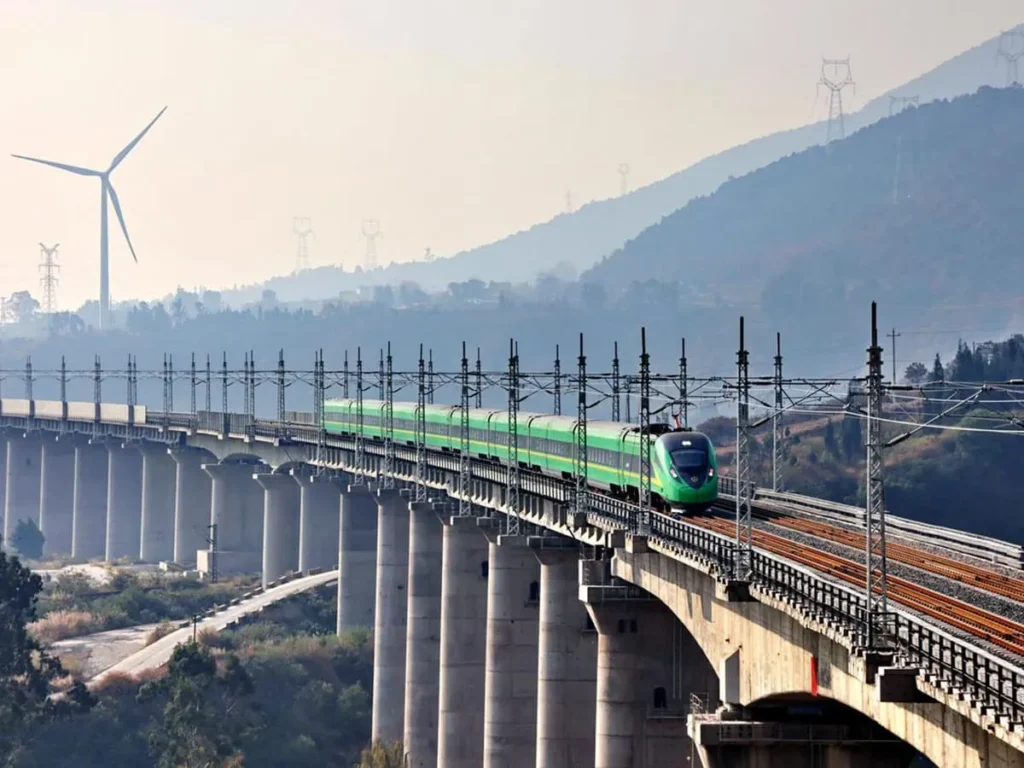
Project Overview
The Qingdao-Rongcheng Intercity Railway (Qingdao-Rongcheng ICR) is a pivotal rail corridor in Shandong Province, running southwest to northeast along the Jiaodong Peninsula, and forms the backbone of the region’s intercity rail network. As part of China’s “Eight Vertical and Eight Horizontal” high-speed rail grid, the line contributes to the Coastal Corridor, facilitating both regional mobility and national connectivity.
Construction began on October 10, 2010, with phased openings: the Jimo to Rongcheng segment in December 2014, the Qingdao–Yantai direct line and Yantai–Rongcheng link in February 2015, and full-line operation commencing on November 16, 2016. The railway extends 316 kilometers with 15 stations, designed for speeds of 250 km/h, and operates at the same velocity.
Project Overview
The Qingdao-Rongcheng Intercity Railway (Qingdao-Rongcheng ICR) is a pivotal rail corridor in Shandong Province, running southwest to northeast along the Jiaodong Peninsula, and forms the backbone of the region’s intercity rail network. As part of China’s “Eight Vertical and Eight Horizontal” high-speed rail grid, the line contributes to the Coastal Corridor, facilitating both regional mobility and national connectivity.
Construction began on October 10, 2010, with phased openings: the Jimo to Rongcheng segment in December 2014, the Qingdao–Yantai direct line and Yantai–Rongcheng link in February 2015, and full-line operation commencing on November 16, 2016. The railway extends 316 kilometers with 15 stations, designed for speeds of 250 km/h, and operates at the same velocity.
Engineering Challenges
The Qingdao-Rongcheng ICR presented numerous technical and environmental challenges, including:
Complex tunnel construction: The line traverses densely built urban areas, with 30 tunnels spanning varied geological conditions and gradients.
Numerous bridges: The railway comprises 185 bridges, ranging from small viaducts to major river crossings, each with unique load, wind, and seismic requirements.
The project demanded meticulous planning to integrate high-speed rail safety standards with construction feasibility across urban, coastal, and riverine terrains.
Key Structures and Innovations
1. Jiaozhou–Jimo Railway Overpass (Crossthe Jiaozhou–Jimo Bridge)
This bridge is a critical control point along the line, stretching 5,184.68 meters with 149 spans. It crosses:
Existing Jiaozhou–Jinan Railway
Jiqing Expressway
Two urban arterial roads
Challenges included live train operations, high-voltage catenary systems (27,500 V) below the bridge, and complex traffic management. Engineers used synchronized lifting and rotation of two main bridge segments via computer-controlled alignment systems, with final joint grouting to achieve precise continuity and load transfer.
2. Shuangdao Bay Cross-Sea Bridge
The Shuangdao Bay Bridge, spanning 6,726.79 meters, is the longest continuous beam bridge along the railway. The main span reaches 128 meters, marking it as the largest continuous span on the line. Special care was taken to avoid contamination of aquaculture areas, requiring careful logistics and environmental monitoring during construction.
3. Zhenshan Tunnel
The 5,505-meter Zhenshan Tunnel serves as a crucial gateway into Yantai City. Located entirely beneath urban areas, the tunnel’s vertical distance to the surface varies from 4 meters to 129 meters, demanding innovative ground reinforcement techniques:
Surface grouting stabilization
Pipe-roof supporting systems within the tunnel
These approaches ensured structural safety while minimizing disruption to city infrastructure.
Structural Design Highlights
Track alignment: 316 km of dedicated high-speed tracks, fully electrified, with 250 km/h design speed.
Bridge technology: Combines continuous steel and pre-stressed concrete bridges for optimal load distribution and durability.
Tunnel design: Employs segmental lining and pipe-roof support to withstand urban subsidence and seismic forces.
Dual-use environmental control: Coastal bridges include storm surge mitigation and marine ecosystem protection measures.
The design emphasizes high-speed operational safety, earthquake resistance, and long-term maintenance efficiency.
HiTens Contribution
HiTens tools were integral to the project’s precision assembly and structural reliability, particularly on:
Bridge construction:
Ensuring high-strength bolts were installed to exact torque values for steel trusses and bridge segments.
Maintaining consistent tension across long spans, critical for both vertical load and seismic resilience.
Tunnel and portal structures:
HiTens torque wrenches were used on reinforced steel connectors within tunnel linings and portal supports.
Provided calibration and quality assurance to maintain millimeter-level alignment across curved and inclined tunnels.
Complex span closure:
During the rotation and joining of Jiaozhou–Jimo bridge segments, HiTens tools ensured joint bolts met precise specifications, safeguarding the bridge’s structural continuity.
By providing high-precision bolting solutions, HiTens enabled engineers to meet rigorous design tolerances, even under challenging construction conditions.
Operational Impact
The Qingdao-Rongcheng ICR has dramatically improved regional transportation:
Travel times reduced: Qingdao to Rongcheng now under 3 hours, a significant improvement over prior rail or road alternatives.
Passenger capacity: Supports hundreds of thousands of passengers daily, connecting multiple urban centers.
Freight integration: Allows smooth transit for goods between industrial hubs along the Jiaodong Peninsula.
Urban connectivity: Enhances access between Qingdao, Yantai, Weihai, and neighboring cities, fostering economic development and tourism growth.
The railway has enabled the formation of a “one-hour economic circle” linking Qingdao, Yantai, Weihai, and Rongcheng, while boosting tourism and local industries through improved accessibility.
Economic and Social Benefits
Regional development: The railway transformed the Jiaodong Peninsula from a peripheral coastal area into a strategic gateway for domestic and international trade.
Tourism growth: Quick access has spurred development of “Xianju” health tourism, coastal culinary experiences, and leisure travel routes.
Job creation: Construction and operational phases have provided significant employment opportunities, particularly in engineering, logistics, and tourism services.
Connectivity: Strengthens ties with neighboring regions, including Liaodong Peninsula, Japan, and South Korea, enhancing the area’s position as a transport and trade hub.
HiTens Impact Summary
HiTens tools were indispensable across the Qingdao-Rongcheng ICR project, ensuring:
Precise torqueing of high-strength bolts for bridges, tunnels, and viaducts.
Consistency in structural alignment, reducing risk during high-speed train operations.
Enhanced safety and reliability, enabling seamless rail and urban integration.
Through the application of advanced fastening solutions, HiTens contributed to the delivery of China’s first intercity high-speed railway in Shandong Province, transforming both regional mobility and economic patterns.
Learn more from our FAQ
Learn how HiTens supports construction and industrial projects worldwide with reliable shear and torque wrenches, precision calibration, and professional support.
What industries does HiTens serve?
HiTens supply all kinds shear wrench, electric torque controlled wrench, from M12 to M36, from metric to inch standard, and solution for construction bolt installation.
What makes HiTens wrenches reliable?
Every HiTens wrench is engineered for precision, strength, and durability. They are designed to ensure consistent torque stability and ease of operation, even in the most demanding environments.
Does HiTens offer customized wrench solutions?
Yes. We can design and manufacture custom shear wrenches and torque wrenches tailored to your specific project requirements and standards.
How does HiTens ensure product quality?
Our wrenches are manufactured under strict quality control protocols that meet both national and industry standards. We are also fully certified under the GJB9001B-2009 Quality Management System.
What kind of after-sales support does HiTens provide?
We offer comprehensive technical support—from product selection and calibration to on-site troubleshooting—helping our customers minimize downtime and maximize efficiency.